Enterprise AI is waiting for its iPhone moment
09.10.2026
Author - Enrique Dans
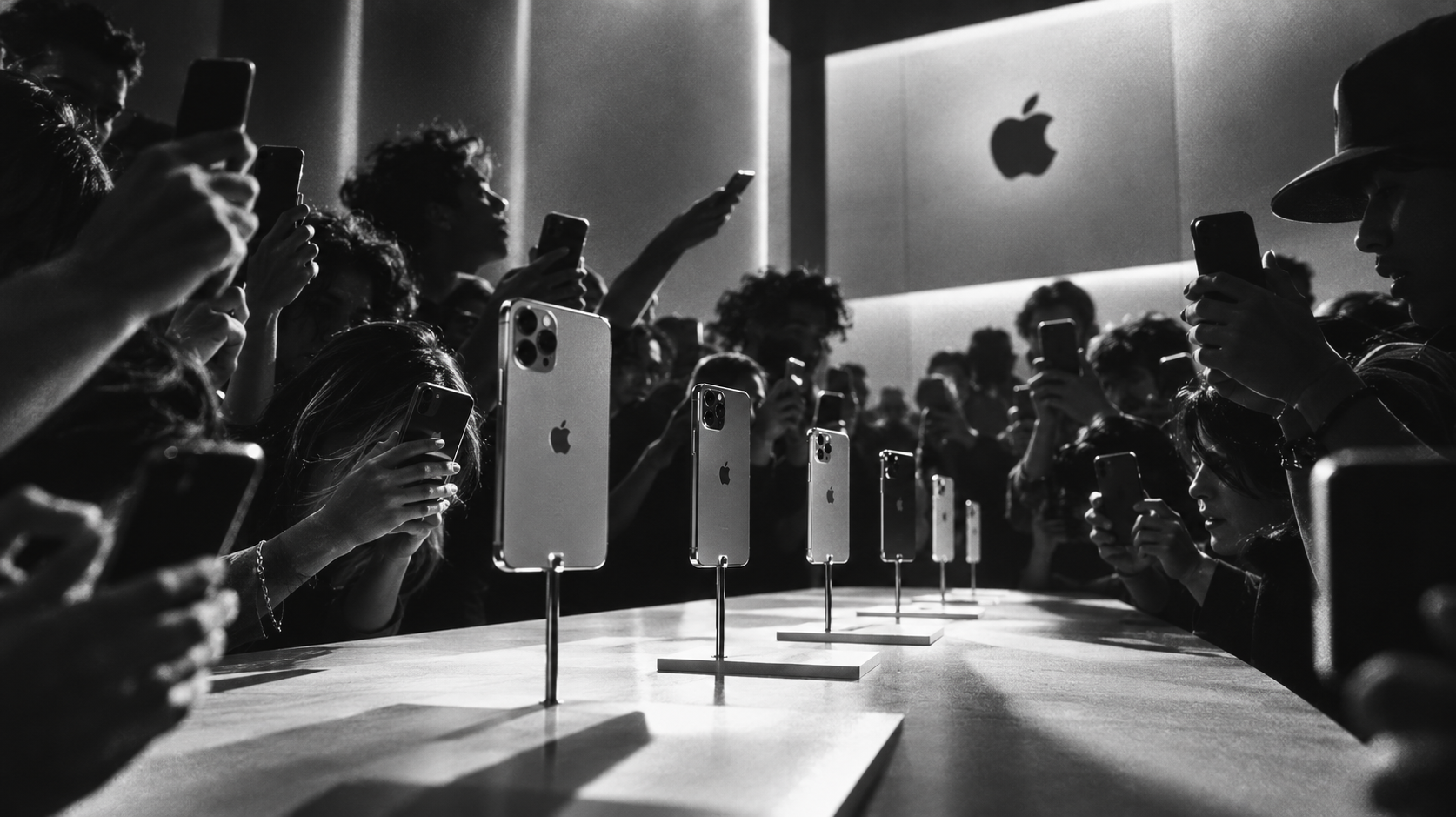
I still remember where I was when Steve Jobs walked onto the stage at the Moscone Center in January 2007. I was watching the livestream, and somewhere around the first demo I had the distinct feeling that the ground had shifted. Not because the iPhone invented anything, but because it made everything that already existed finally work together.
Edsger W. Dijkstra once said that “complexity sells better.” But every so often, simplicity wins by such a margin that the whole market has to reorganize around it.
I see this pattern again and again in technology. The underlying capability exists, sometimes for years, but the market doesn’t really take off until somebody manages to hide the ugly parts. That is precisely where corporate AI is right now.
The AI industry talks about intelligence as a utility, and then sends extremely expensive engineers into clients’ offices to make the utility actually work. A truly mature technology scales by hiding complexity. It doesn’t scale by dispatching specialists to each customer.
Before the iPhone, smartphones were fundamentally in the hands of technophiles like myself, executives, and IT departments. After the iPhone, the product became massively adopted because it stopped requiring technical knowledge from the user. I still remember handing my mother her first iPhone. I did not explain gestures, menus, or navigation. I just gave it to her, and within minutes she was doing almost everything she needed.
The equivalent moment in corporate AI will come when a business unit can deploy all types of highly sophisticated AI capabilities, without first having to commission some sort of bespoke architecture and deploy a team of consultants across the organization.
But here comes the second part of the analogy . . . the App Store. The real platform effect of the iPhone arrived in 2008, when Apple launched the App Store. I use this case every year with my MBA students because it’s one of the cleanest examples of how a product becomes a platform. On the first weekend, more than 10 million downloads. Developers could build whatever they wanted without reinventing the operating system, the device, or the distribution. The platform absorbed the hard parts; they supplied the ideas.
That’s the future of corporate AI, too: a platform on which business capabilities can be activated without building a bespoke architecture every time. Sales, customer service, procurement, compliance, logistics: None of these should require different technical foundations.
Once a platform handles identity, permissions, context, memory, governance, and learning, adding a new capability should feel more like adding a new app than commissioning a new IT project. So when corporate AI reaches its iPhone moment, the interesting question will be whether your company is ready to use a platform that makes all of that irrelevant. Deploying AI should stop feeling like an IT project and start feeling like installing an app.
We are not there yet. But I’ve seen this movie before.